As London grows and develops, so does the pressure on local ecosystems.
Given Ontario’s high population density, large importing quantity, global traffic, and ideal environmental conditions, Ontario is more susceptible to new invasive species than other provinces or territories. As invasive species are becoming more common in our area, they continue to threaten both biodiversity and ecosystem health. Native plants; which are well adapted to local conditions, offer a resilient and sustainable path to ecological recovery.
What are Invasive Species?
Invasive species are plants, animals, or insects that are either accidentally or intentionally introduced outside of their natural range. Since they lack natural predators, they often spread extremely fast and outcompete local species. Invasive species can threaten long-term persistence and function of forest ecosystems by hindering forest regeneration and preventing healthy understory regeneration. But it’s not only the environment that suffers. Alongside ecological damage, Ontario faces major economic costs tied to invasive species research, prevention, and removal.
Ecological Cost
- Invasive species are the second most serious threat to native species in Ontario, following habitat loss.
- Zebra mussels have nearly wiped out native mussels in Lake Erie, leaving 8 freshwater mussel species endangered.
- Across Ontario Forests, garlic mustard has displaced many forest-floor plants, leaving many native species endangered and threatening our forest ecosystems.
Economic Impacts
- Zebra mussels cost an estimated up to $91 million per year in research, removal, and charcoal treatments for odour.
- The Canadian Food Inspection Agency spent over $30 million, cutting 130 000 trees to mitigate the spread of the Emerald Ash Borer, which decimated more than 1 million Ash trees in southwestern Ontario.
Common Invasive Species in Ontario:
| Buckthorn |
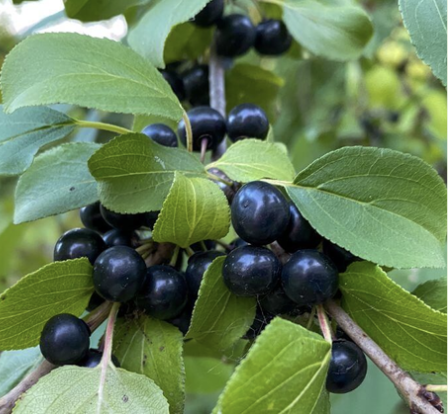 |
A shrub introduced from Europe. It spreads rapidly, forms dense thickets, and shades out native understory plants. |
| Giant Hogweed | 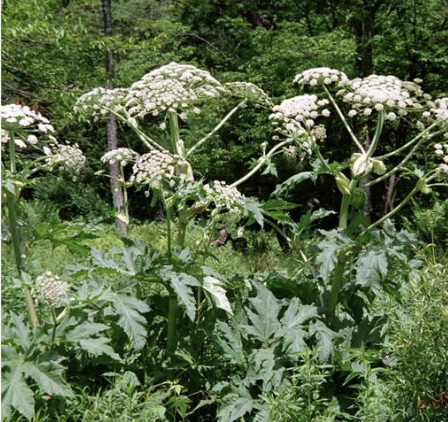 |
A tall weed plant originally from Asia. Its toxic sap can cause severe skin burns, and its massive size crowds out native vegetation. |
| Flowering Rush | 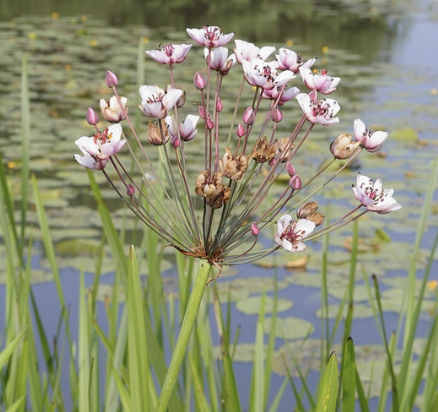 |
An ornamental wetland plant introduced from Eurasia. It invades shorelines and wetlands. |
| Garlic Mustard | 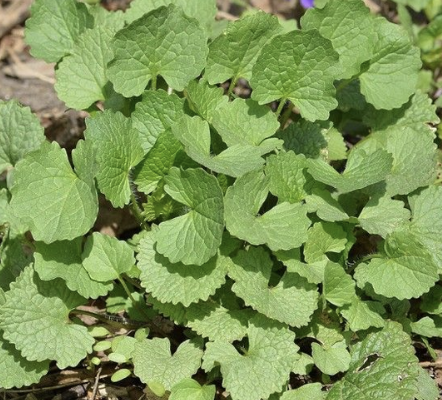 |
A European herb that spreads aggressively in forests. It outcompetes native wildflowers and alters soil fungi that native plants rely on. |
| Emerald Ash Borer | 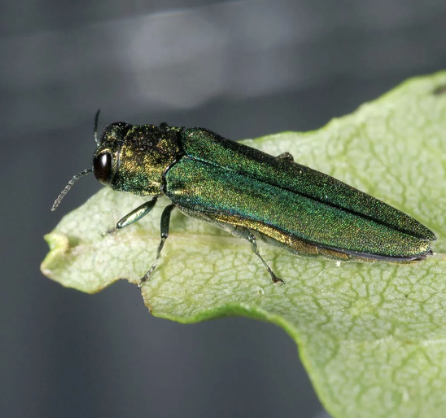 |
An invasive beetle from Asia. Its larvae tunnel under the bark of ash trees, cutting off nutrient flow and killing millions of trees across Ontario. |
| Zebra Mussels | 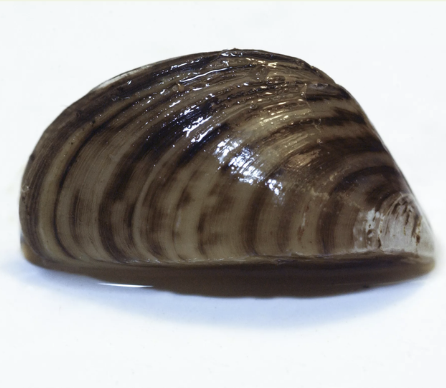 |
Small mussels introduced from Eastern Europe. They attach to hard surfaces and outcompete native mussels for food and habitat. |
.
Native Plants: What are They and Why do They Matter?
Native plants are indigenous species which occur naturally in the region where they evolved. Over time, local insects have co-evolved with native plants while using them as a primary food source and habitat support. Birds then feed on those insects, creating an interconnected ecosystem. Without native plants, insects lose their food and habitats, and bird and wildlife populations inevitably decline. Every organism plays a crucial role in keeping their ecosystem balanced. Native plant species are most at risk when their habitats are fragmented or when they are less competitive against other plants.
Restoring Spaces with Native Plants Offers Many Benefits:
- Adapted to local environmental conditions, native plants require far less water, while staying greener for a longer portion of the year. This reduces the amount of water needed for landscape maintenance, and helps slow down the spread of fires.
- Require very little long-term maintenance if they are properly planted and established
- Provide habitat for native species
- Produce longer root systems which hold soil in place and protect water quality by controlling soil erosion and moderating floods
- Preserve Ontario’s natural heritage for future generations
Challenges of Recolonizing Spaces
Removing invasive species can be extremely difficult, and reinvasion is unfortunately common even when extensive eradication & restoration efforts are made. Recolonizing spaces with native plants is a sustainable approach to restoring ecological balance. While herbicides are most commonly used to eradicate invasives, they are not always effective in supporting long-term recovery. Although they effectively reduce invasive plant cover, the resulting habitat is often not associated with substantial native plant growth, as broad-scale application of herbicides can hinder seed native establishment.
Research shows that the fastest recovery rates of a previously invaded space come from a combination of repeated clippings, seed additions, and high native richness. Native richness refers to the variety of native plant species in a specific area which contributes to niche complementarity; when multiple species occupy the same area by utilizing different aspects of the same resources. Richer plant communities are more efficient at filling ecological gaps, which helps prevent invasive species from reinvading after removal.
A Sustainable Path Forward
Although Ontario has an Invasive Species Strategic Plan, the province lacks an analysis of net cost of invasive species prevention, management, and mitigation. As a citizen, you have power. Use your vote to support policies that prioritize biodiversity, fund prevention efforts, and invest in sustainable, long-term ecological health.
Whether you’re a home owner or land manager, supporting native plants is a tangible way to make a difference. Some steps you can take are:
- Replace Invasive ornamentals in your backyard with native alternatives
- Learn to identify and report invasive species in your area
- Participate in community habitat restoration
Learn More
Education is the first step to addressing invasive species. Trusted sources offer reliable guidance on identification, management, and prevention. Below is a list of resources to help you explore this topic further and take informed action in your own community.
Resources:
Invasive species fact sheets (PDFs). (n.d.). ontario.ca.
https://www.ontario.ca/page/invasive-species-fact-sheets
Invasive species in Ontario. (n.d.). ontario.ca.
Invasive species strategic plan (2012). (n.d.). ontario.ca.
https://www.ontario.ca/page/invasive-species-strategic-plan-2012
Kettenring, K. M., & Adams, C. R. (2011). Lessons learned from invasive plant control experiments: a systematic review and meta-analysis. Journal of Applied Ecology, 48(4), 970–979.
https://doi.org/10.1111/j.1365-2664.2011.01979.x
Petri, L., & Ibáñez, I. (2025). Successful recovery of native plants post‐invasive removal in forest understories is driven by native community features. Ecological Applications, 35(2).
