
5 Things to Consider Before Planting a Rain Garden
Do you have flooding on your property? Frustrated with this standing water? Turn this flooding into function! Rain gardens are a type of garden design that collect, filter, and absorb your rainwater. When built properly, rain gardens capture stormwater, reduce flooding, increase biodiversity, decrease pressure on municipal infrastructure, remove pollutants entering our watershed, and add beauty to any landscape.
Want to take climate action? Consider these 5 things before you pick up a shovel.
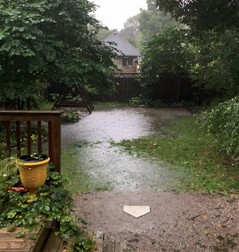
1. Observe your waterflow
Take time to observe your entire property. After a rain event, are there any areas where water naturally pools, floods, and collects? These areas would be ideal locations for a rain garden. Rain gardens are often designed to receive water from your roof through an eavestrough and downspout. Because roofs are impermeable surfaces, directing this runoff into a rain garden is a common and effective way to manage rainwater. Instead of sending this water into storm drains or having it flood your property, re-direct this water into a rain garden where it will slow down, filter out pollutants, and soak into the root systems of native plants.
If re-directing roof runoff isn’t an option, not a problem! Rain gardens will still act as a sponge in these soggy areas. You may also want to consider building a shallow swale to direct water into this area, ensuring the soil drains well, and planting water-loving native plants to manage this water.
2. Distance from your house or any building foundation
Before you plan too much, ensure your rain garden will be planted a minimum 10 feet away from any house or building foundation. This allows water to soak into the ground, without the risk of any backflow or increasing moisture near your foundation. Always direct water away from your home.
3. Test your drainage
Test your soil drainage. Rain gardens with compacted soil will not be able to properly absorb water, and on the flip side, rain gardens with too much sand may drain too quickly and not retain any moisture for your plants.
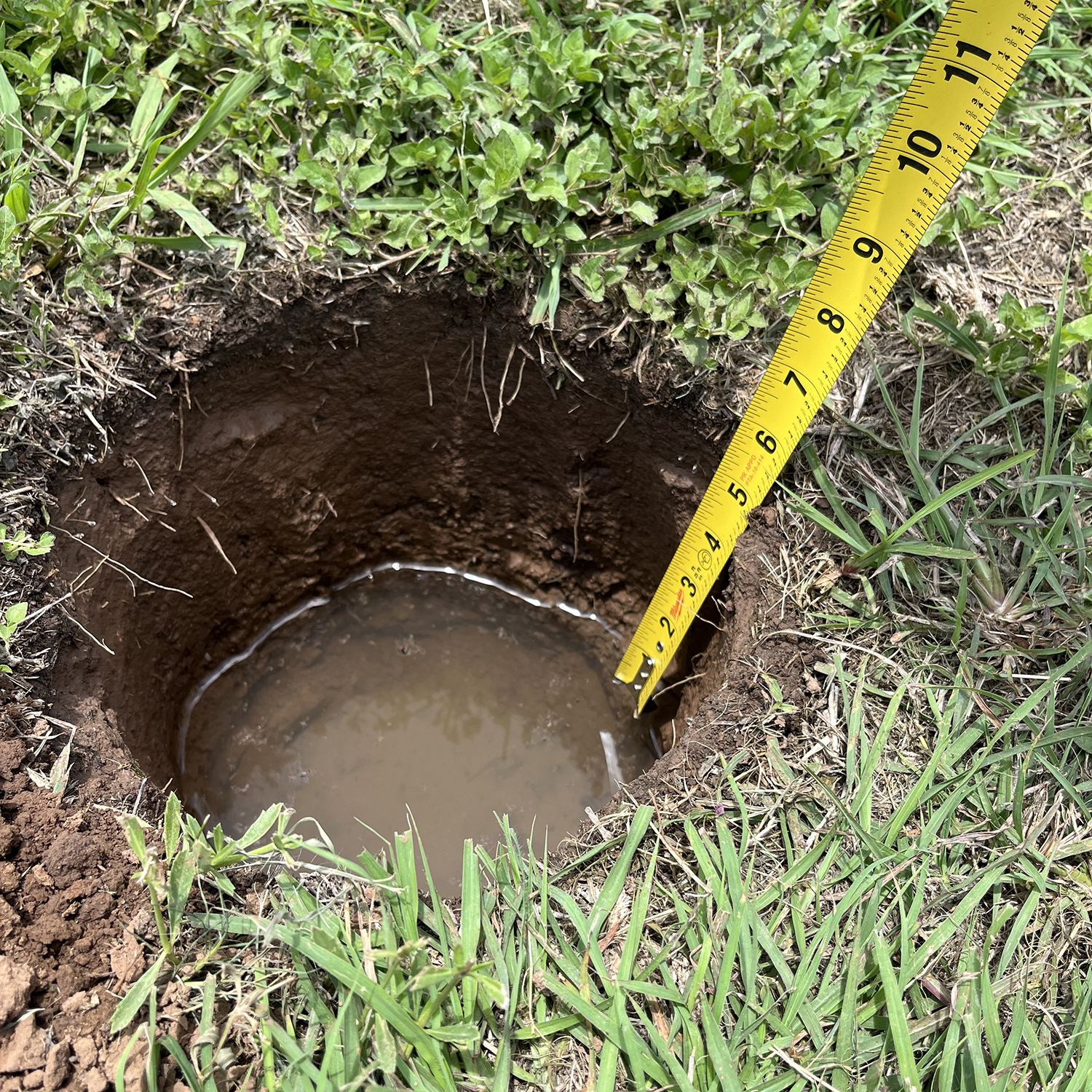
An easy way to test your soil is to conduct a percolation test, which measures how fast (or slow) water absorbs into the earth.
- Dig a hole around 12 inches wide and 12 inches deep in the area you plan to plant your rain garden.
- Fill this hole with water, and measure how long it takes for the water to absorb
- Ideally, water should be absorbed within 24-36 hours
If your water takes longer to absorb, your soil is likely compacted and has a higher clay content. In this case, adding soil amendments, such as compost and sand, will be important to improve the overall soil structure and improve infiltration.
4. Plant selection
Selecting water-loving native plants for your rain garden will help make your garden thrive. These root systems act as a sponge, soaking up groundwater, filter out any pollutants, and manage rainwater effectively. Native plants have deep root systems that break up your soil, create more room for oxygen, and improve overall soil structure. Because native plants have evolved with our local ecosystems, they are essential habitats and food sources for local wildlife and pollinators. They will also require less watering and maintenance, as they are well adapted into our climate conditions. Click here for a native plant guidebook.
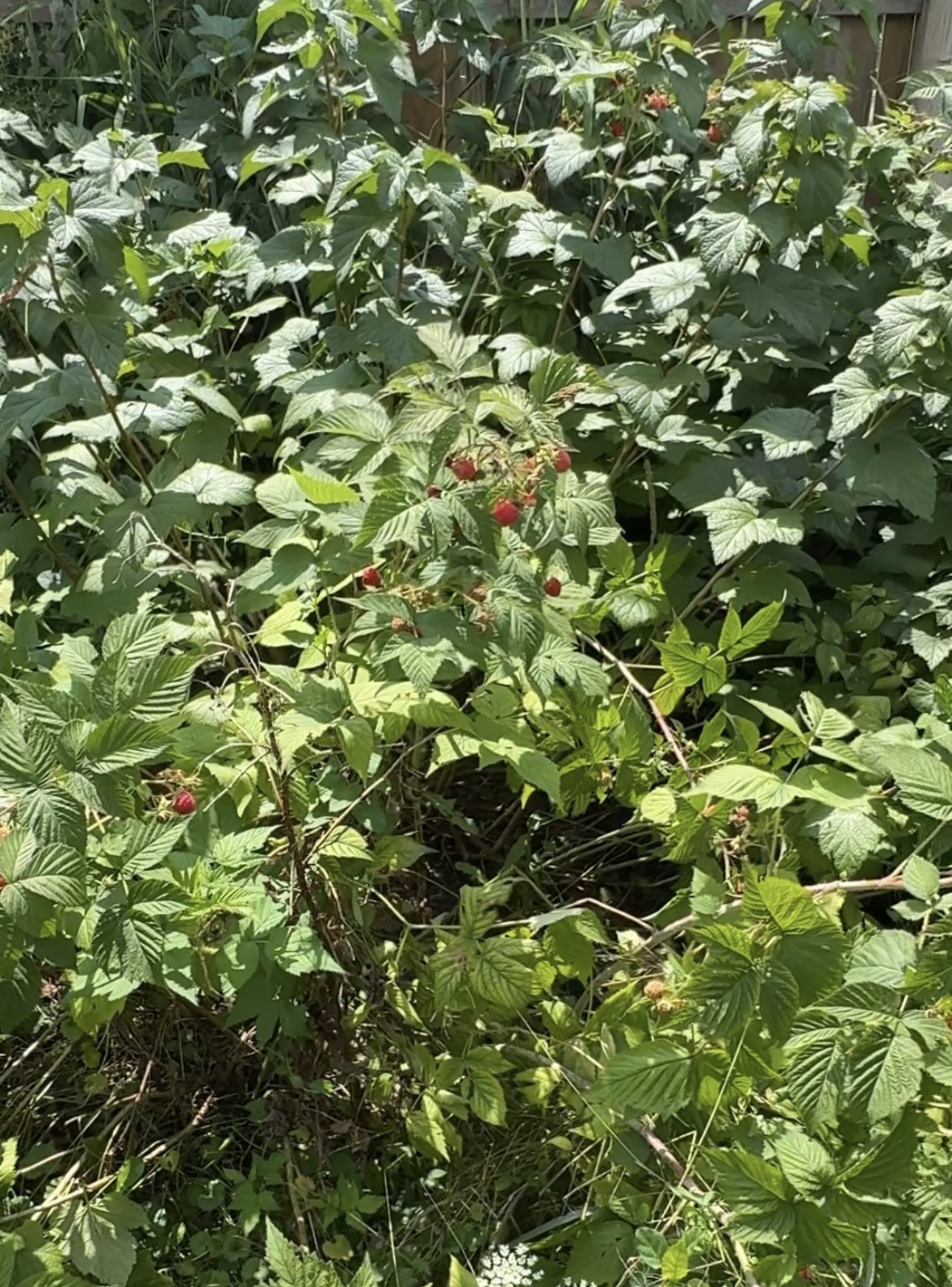
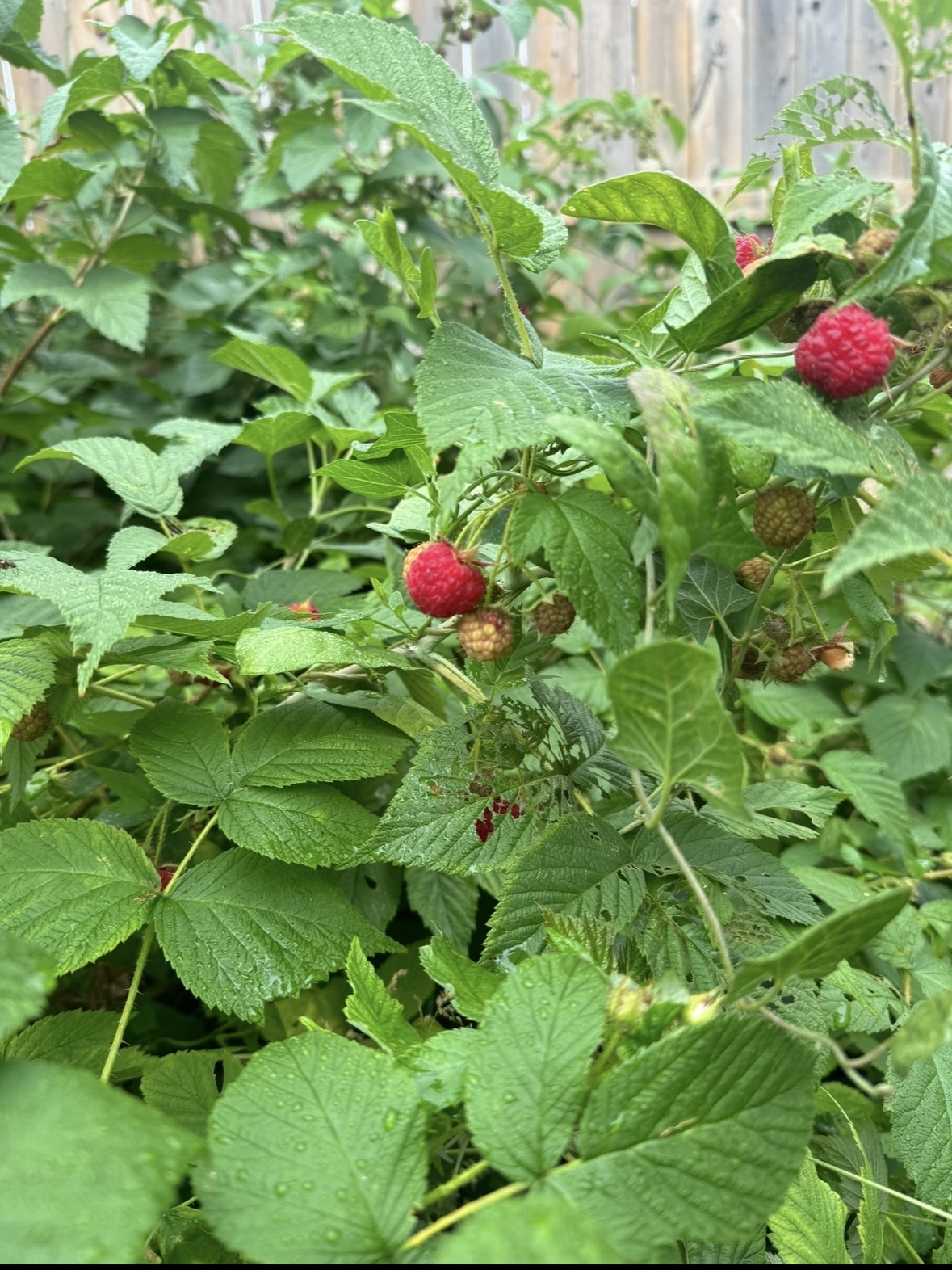
You could also consider incorporating edible perennial plants in your garden, such as raspberries, serviceberries, or a pawpaw tree. These water loving plants will act as a sponge and be thrilled to soak up all your rain water, while also providing you with a large harvest to enjoy!
5. Overflow pathways
During extreme heavy rainfall events, even well-designed rain gardens may be unable to absorb all water. For this reason, it is important to provide a safe overflow pathway so any excess water can leave your rain garden (and be directed away from your home!). Small stones are an effective way to direct any overflow towards your lawn or nearby storm drains. Water will run off at a much slower pace, and pollutants will have been filtered out by native plants. Check out the image below.
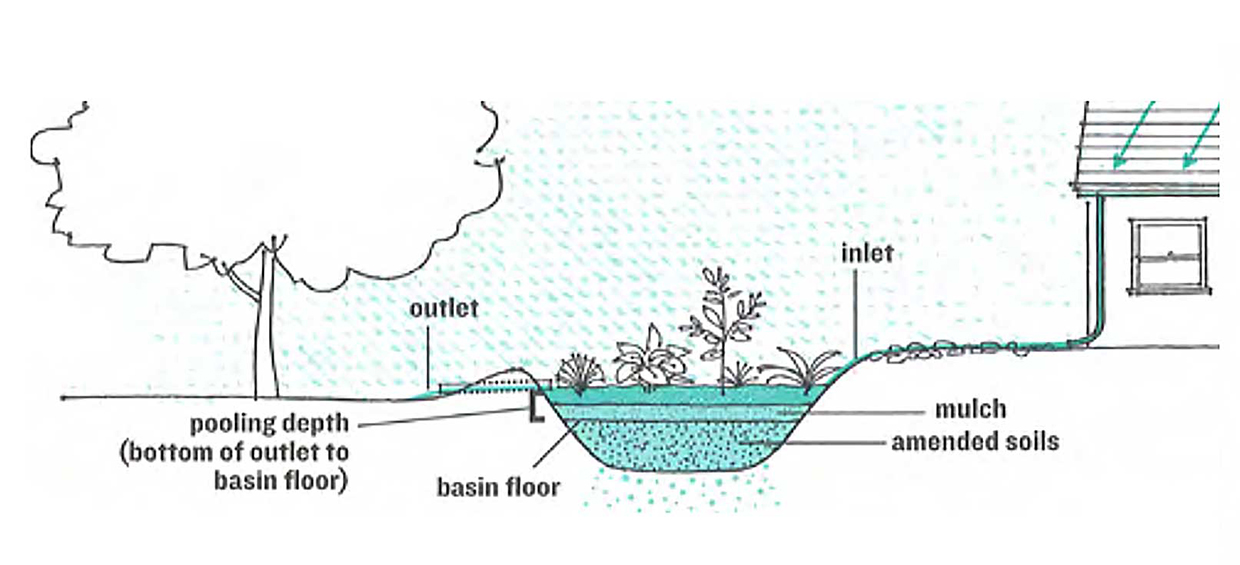
Rain gardens are more than just another type of garden. They are a practical way to work with nature, rather than against it. Instead of trying to get rid of this rain water, utilize this abundant natural resource. By getting to know your property, observing and understanding the flow of water, you can harness this valuable rain water. By slowing this water down and directing it into a native plant system, you can turn this flooding into a beautiful, biodiverse, and productive landscape.
Our 2026 Residential Rain Garden Program is accepting applications until March 23rd.
8 homeowners will be selected and supported to build a rain garden on their property.
Important: Before you dig, call Ontario One Call to map out any underground utilities.
Joanna MacLeod
Sustainability Manager
London Environmental Network
